

On badminton racket orders, every interface carries a stack-up that somebody has to sum. Two parts, a fastener and a coating each carry a tolerance, and the badminton racket inherits all of them; if nobody adds them, the clearance at the joint is decided by the drawing's optimism. A badminton racket designed to nominal dimensions with tolerances inherited from three providers has a fit nobody calculated. The sum takes an afternoon, worst case first, and it is far cheaper than the rework loop that follows a joint that will not close. The same test applies to any wholesale badminton racket.
Sum the stack before release, not after the joint fails.
This guide explains how badminton and racket sports equipment is tested, which standards apply, what certification actually proves, and how purchasers can verify quality before, during and after production. It reflects the practices at 杭州乐檬进出口有限公司 (www.factoryracket.com).
Providers make broad quality claims. Across badminton racket projects, these are the specific questions that turn a claim into evidence.
Which standard, exactly? Request the standard number, not a general assurance.
Who issued the certificate? For badminton and racket sports equipment work, recognised third-party bodies carry more weight than self-declarations.
What is the scope? A certificate may cover only part of the product range.
Is it current? Confirm validity dates and renewal status.
What is the incoming verification protocol? Require the checklist and sampling plan.
What happens when a fault is found? For badminton rackets buyers, a defined corrective process matters more than a zero-fault promise.
A quality management system (QMS) is the documented set of processes that control how a badminton racket is made, inspected and released. On badminton racket orders, certification such as ISO 9001 confirms that the system exists and is audited; it does not by itself guarantee product quality, but it makes quality repeatable.
Incoming material control: verifying raw materials against specification before use.
In-process control: checking parameters and dimensions during production.
Final examination: verifying finished goods before packing.
Corrective action: investigating and fixing root causes of faults.
Purchasers should treat a QMS as a foundation. On badminton racket orders, on its own it is necessary but not sufficient; it must be paired with genuine product testing.
Different badminton rackets require different tests, but the categories are consistent across manufacturing:
| Test Category | What It Verifies | Typical Method |
|---|---|---|
| Dimensional | Size and tolerance | Caliper, gauge, CMM |
| Functional | Performance under load | Bench and endurance testing |
| Material | Composition and grade | Spectrometry, certificate review |
| Safety | Conformity with standards | Type testing, Hipot, pressure test |
| Environmental | Resistance to conditions | Humidity, temperature, salt spray |
On badminton racket jobs, ask which of these are performed routinely and which only on request. In badminton and racket sports equipment work, a plant that tests every batch is fundamentally different from one that tests only the first sample.
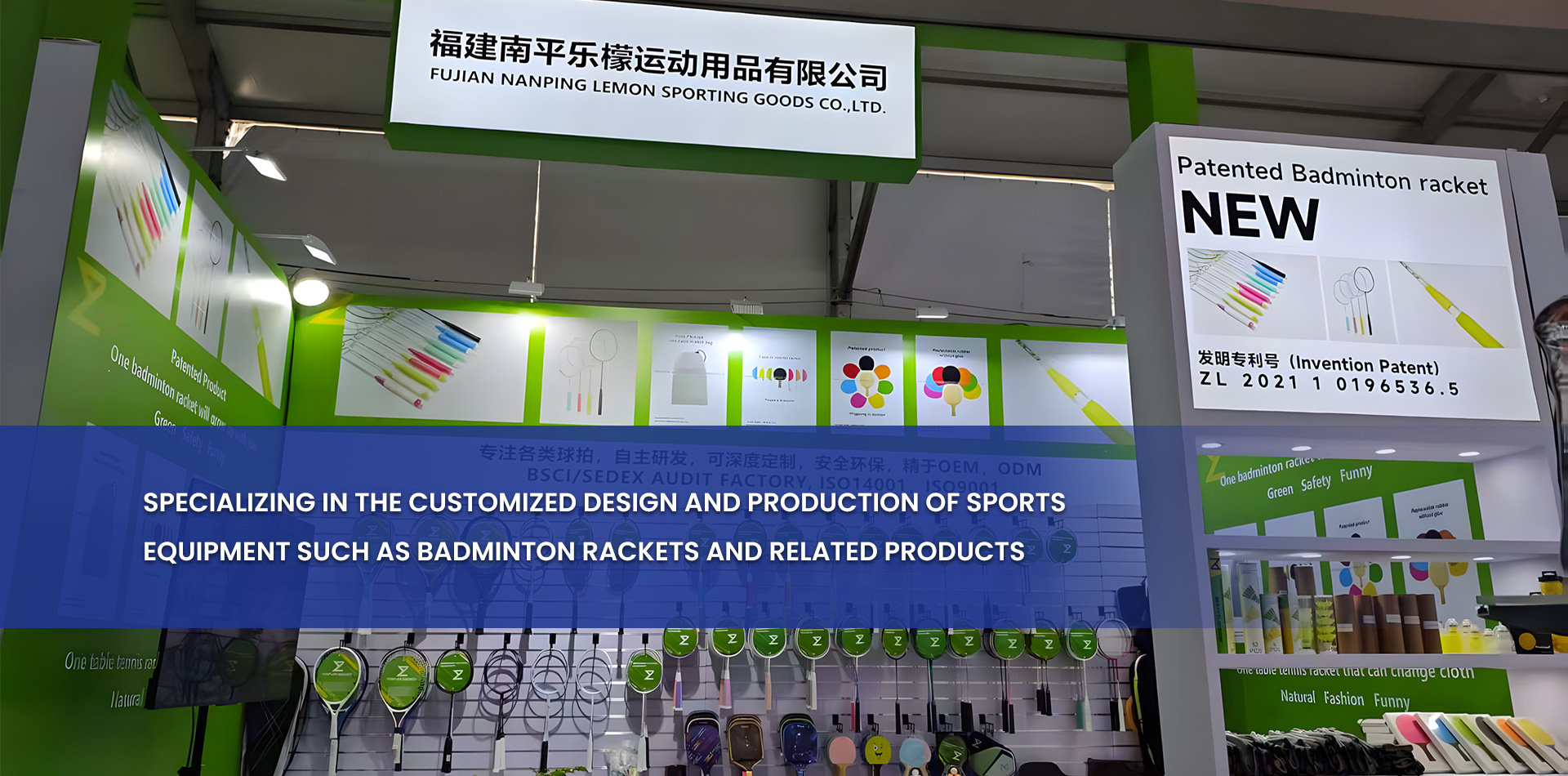
Certification confirms that a badminton racket or process has been assessed against a standard by an accredited body. Across badminton racket projects, it is a valuable signal, but it is not a guarantee of every unit.
Proves: the tested sample complied with the standard at the time of testing.
Does not prove: that every production unit complies, or that the badminton racket plant maintains the same process over time.
Best practice: combine certification with routine batch testing and periodic re-verification.
For badminton and racket sports equipment, the relevant certifications typically include BWF approval, ISO 9001:2015, CE. On badminton racket jobs, establish the scope of each certificate covers the exact product you are buying.
On badminton racket orders, a simple incoming examination protocol is the purchaser's last line of defence. In badminton and racket sports equipment work, it is inexpensive and catches the majority of issues before they reach clients.
For any badminton rackets programme, sample the consignment according to a defined plan (for example, per pallet or per batch).
In badminton and racket sports equipment programmes, measure the key specification parameters and record the results.
Functionally test a representative subset.
Within badminton and racket sports equipment, verify labelling, packaging and documentation against the approved artwork.
On clubs and academies projects, document results by batch number and raise trends with the provider.
For badminton rackets buyers, reject or negotiate remedies for any lot that fails the criteria.
Keep the data. On badminton racket orders, an importer who can show three months of measured results has far more leverage in a quality conversation than one who reports only that a batch felt wrong.
For badminton and racket sports equipment work, understanding why quality varies helps importers ask better questions.
Raw material substitution: lower-grade material used to reduce cost.
Tool wear: moulds and dies degrade and produce out-of-tolerance parts over time.
Process drift: settings change without documentation.
Operator variation: manual steps introduce inconsistency.
Sub-provider quality: components from third parties may not meet the same standard.
For badminton rackets buyers, a production site that monitors these factors proactively prevents most faults before they occur.
Across clubs and academies, put quality terms in the agreement, not just in conversation. Within badminton and racket sports equipment, specify the standard, the sampling plan, the acceptance criteria, the remedy for non-conformance, and the documentation you expect with each shipment.
This protects both sides. In badminton racket supply, the provider knows exactly what is expected, and you have a defined basis for discussion if something goes wrong.
For badminton racket buyers, recurring quality management means tracking a small set of metrics rather than reacting to individual complaints.
| Metric | What It Measures | Target | Action If Breached |
|---|---|---|---|
| Fault rate | Share of units failing examination | < 1% | Investigate root cause with provider |
| On-time dispatch | Consignments meeting the agreed date | > 95% | Examine capacity and planning |
| First-pass yield | Units passing without rework | > 98% | Analyse process weak points |
| Warranty claim rate | Field failures under warranty | < 2% | Reassess design and testing |
| Documentation accuracy | Correctness of shipping paperwork | 100% | Tighten release checklist |
Track these monthly and review them with the vendor quarterly. In badminton and racket sports equipment practice, a small set of well-understood metrics beats a large set of ignored reports.
Across clubs and academies, the applicable standards depend on your destination market and product category. These are the ones most commonly requested.
BWF Laws of Badminton: verify the plant can supply the current certificate and that its scope covers badminton racket.
ISO 9001: verify the plant can supply the current certificate and that its scope covers badminton racket.
CE: verify the production site can supply the current certificate and that its scope covers badminton racket.
REACH: verify the production site can supply the current certificate and that its scope covers badminton racket.
BWF approval: request the certificate and confirm validity.
ISO 9001:2015: request the certificate and confirm validity.
CE: request the certificate and confirm validity.
In badminton racket supply, this is the workflow that turns a quality policy into shipped quality.
Approve the badminton racket requirement and the golden sample in writing.
Verify incoming materials against certificates.
Control in-process parameters and record them.
Run functional and safety tests at defined intervals.
Perform 100% or AQL final verification before packing.
For any badminton rackets programme, complete a pre-consignment examination with photographic records.
Archive the badminton racket lot documentation for traceability.
In badminton and racket sports equipment programmes, feed field performance back into design and process improvement.
The calculation starts by naming what moves. In badminton racket supply, each dimension in the chain carries its own tolerance, each process adds its own variation, and the coating, the fastener and the thermal expansion of each material join the sum. Across badminton and racket sports equipment projects, the datum reference frame comes first, named per ISO 1101 or ASME Y14.5-2018, because two parties measuring from different origins will produce two different answers from the same part and both will be right. A badminton racket interface with no stated datum is an interface that will be measured twice and argued about once.
| Element | Value to Fix on a Badminton Racket | The Failure It Prevents |
|---|---|---|
| Datum frame | A, B and C named; order of precedence stated | Two origins, two verdicts |
| Worst-case sum | Arithmetic total of every tolerance in the chain | A joint that will not close on the tail |
| Statistical sum | Root-sum-square, used only where failure is recoverable | A stack nobody can afford to machine |
| Position at MMC | Diametral zone with bonus tolerance stated | Rejection of a part that assembles |
| Fit class | H7/g6 at 50 mm gives 0.009 mm to 0.050 mm clearance | A fit chosen by habit |
| Flatness | 0.05 mm on the seating face | A rock that torque cannot remove |
Worst case and root-sum-square answer different questions. Across badminton racket projects, the arithmetic sum assumes every part at its extreme in the same direction, which is improbable and expensive to design for; the statistical sum assumes independent distributions, which is reasonable for a stack of five or more and reckless for a stack of two where failure means a safety function. In badminton and racket sports equipment practice, the engineering rule is to use worst case where the consequence is unacceptable and the statistical method where it is recoverable, and to say in the drawing note which one was used. For badminton and racket sports equipment work, the mixed-material joints are where the two methods diverge most.
Thermal growth belongs in the same sum. Aluminium expands about 23 µm per metre per kelvin and steel about 11.7, so a 1000 mm aluminium member moves 0.23 mm over a 10 K swing while its steel neighbour moves 0.12 mm - a differential larger than the machining tolerance on many parts. A badminton racket that fits on the bench and interferes at operating temperature has a stack-up that was calculated at the wrong temperature, and the correction is a slot, a floating fastener or a stated assembly temperature.
For badminton racket buyers, solid wood packaging - pallets, crates, dunnage, blocking - must be heat treated to 56 °C at the core for 30 minutes, kiln dried below 20 % moisture content, or treated on another approved schedule, then marked with the IPPC symbol, country code, provider number and treatment code on two opposite faces. Plywood and other manufactured sheet is outside scope. In badminton and racket sports equipment practice, the treatment record, not just the stamp, is what proves the schedule was applied.
Across badminton racket projects, name the datum frame first, then add every tolerance in the chain: the two mating parts, the fastener, the coating and the thermal growth of each material. Across badminton and racket sports equipment projects, the arithmetic sum gives the worst case; the root-sum-square gives the statistical case and is appropriate only where failure is recoverable. Aluminium moves about 23 µm per metre per kelvin against 11.7 for steel, so a 1000 mm mixed joint shifts 0.11 mm over a 10 K swing.
No. For badminton racket buyers, product liability pays third-party injury and property damage; recall expense cover pays the first-party cost of notification, retrieval, storage and destruction, usually under a sub-limit with a waiting period. In badminton and racket sports equipment practice, a programme with liability limits and no recall sub-limit has insured the lawsuit and left the retrieval unfunded. For badminton and racket sports equipment work, confirm also the trigger, the territorial scope and whether the importer is named as additional insured.
On badminton racket jobs, oEE is availability multiplied by performance multiplied by quality, each measured separately over a defined run: 95 % availability, 95 % performance and 99 % quality give about 89 %. In badminton and racket sports equipment practice, the number is only meaningful if rated capacity is defined in units per hour at stated conditions, and if load, ambient temperature, duration and instrument class are fixed before the run. Without those, performance is measured against a memory.
On badminton racket orders, list the changes that must be notified - material, process, machine or site, sub-tier source, test method, packaging and software - and fix a notice period before the first affected consignment, thirty days being a workable default with an emergency route. In badminton and racket sports equipment work, add the right to refuse a change, re-qualification on consecutive lots with the cost allocated, and a declaration of the revision shipped on the packing list.
For badminton racket buyers, every tender produces questions, and the questions are where the money moves. A clarification log keeps them in one place: a number, the date asked, who asked, the answer given, and whether the answer changes the badminton racket requirement, the price or the programme. In badminton and racket sports equipment work, the discipline is unglamorous and it decides whether the award is built on a document or on a set of recollections. A badminton racket tender run without a log produces an award that both parties remember differently, and the version that wins is the one written into the order.
| Log Field | What It Records for a Badminton Racket | What It Prevents |
|---|---|---|
| Question number | Sequential, never reused, referenced in the badminton racket order | An answer nobody can find later |
| Date and party | When asked, by whom, in which round | A late answer treated as timely |
| Question text | Verbatim, with the drawing or clause it refers to | A paraphrase that widened the scope |
| Answer and basis | The offer plus the reasoning or standard behind it | An answer that cannot be defended |
| Effect | None, price, specification, or programme - stated | A price change discovered at invoice |
| Incorporation | Clause that makes the answer part of the agreement | A helpful email that binds nobody |
Two rules keep the log honest. Answers are given in writing to all bidders at the same time, because a private clarification is a preference with a paper trail; and every answer states its effect, since an answer that changes a dimension without changing the badminton racket price is a discount nobody agreed to. For badminton rackets procurement in clubs and academies, the effect column is the one that gets used in the post-award meeting.
The log closes by incorporation: the badminton racket order names the log, its revision and the answers that form part of the specification. On badminton racket orders, without that sentence the log is a helpful record of a conversation, and a conversation is exactly what the purchaser will be told it was when the first deviation appears.

Critical dimensions are the ones the badminton racket cannot survive without, and there are usually fewer of them than the drawing suggests. The list is built by walking the badminton racket: what locates, what seals, what carries load, what must move. Across badminton racket projects, everything else is a reference dimension and should be marked as such, because a drawing where every dimension is critical has told the machinist nothing and the inspector everything twice.
| Dimension Class | What It Controls | How It Is Verified |
|---|---|---|
| Locating | Position at MMC, datum A/B/C, ⌀0.2 mm zone | Functional gauge or CMM, 100 % or sampled |
| Sealing | Flatness 0.05 mm and surface roughness Ra 1.6 µm | Plate and profilometer, per lot |
| Load-bearing | Wall thickness and fillet radius, ±0.3 mm | Sectioning on the first article |
| Kinematic | Clearance H7/g6, 0.009 mm to 0.050 mm at 50 mm | Plug gauge, go and no-go |
| Thermal | Slot or floating fastener allowing 0.25 mm movement | Assembly at operating temperature |
| Reference | Untoleranced, for information | Not inspected, stated as such |
On badminton racket jobs, each critical dimension needs a capability figure rather than a pass mark. A process running at a capability index of 1.33 produces about 30 parts per million outside limits on a centred normal distribution; at 1.0 the figure is nearer 2700, and a provider quoting a pass rate from a single lot has quoted an outcome rather than a capability. For badminton rackets features in clubs and academies, the first article report should carry the index for every critical dimension, calculated from at least 30 consecutive parts.
The measuring method belongs next to the dimension. On badminton racket jobs, a tolerance of 0.05 mm verified with a caliper whose repeatability is 0.02 mm has been verified by an instrument that consumes 40 % of the allowance, and the rejection that follows is a statement about the caliper.
Across badminton racket projects, first article approval is the moment a drawing becomes a process, and it is worth more than any certificate because it is specific. The pack holds a dimensional report against every characteristic on the drawing, material and heat certificates traceable to the lot, the process record with the parameters actually used, capability evidence on the critical dimensions, and a photograph of the badminton racket and its marking. A badminton racket approved on a sample that happened to fit has been approved on a sample.
| Approval Item | What It Shows for a Badminton Racket | What It Does Not Show |
|---|---|---|
| Dimensional report | Every characteristic, measured, with the instrument named | Whether the next part will be the same |
| Material certificates | Heat number, chemistry, mechanicals, standard | Whether the certificate belongs to this lot |
| Process record | Parameters, equipment, operator, date | Whether the parameters were the ones specified |
| Capability study | Index on each critical dimension from 30+ parts | Whether the badminton racket sample was pre-selected |
| Surface and marking | Photographs, finish measurement, label position | Whether the finish survives handling |
| Deviation list | Every departure, with its concession reference | Whether a departure was left off the list |
The report is read against the drawing rather than against the badminton racket requirement summary, because the summary is where characteristics quietly disappear. Across badminton racket projects, a characteristic that is on the drawing and missing from the report is either not measured or not wanted, and the difference matters at the first rejection. For badminton rackets production in clubs and academies, the purchaser's signature on the report is also the freeze: from that date, a change to process, material or sub-vendor requires notification before it is made.
The freeze is the badminton racket of approval that protects the future. On badminton racket orders, a vendor that improves a process without telling anyone has changed a validated condition, and the improvement may be real while the notification duty is still breached. In badminton and racket sports equipment work, the clause is short: any change to material, method, machine, measurement or sub-tier source is notified in writing and approved before the first affected consignment.
Across badminton racket projects, capability evidence is compared by its arithmetic and its sample size. In badminton and racket sports equipment work, a capability index computed from 30 consecutive parts on a stable process is evidence; one computed from a pre-selected sample of ten is a calculation. Insist on seeing the index per critical dimension, the badminton racket sample size, the period covered, and the control chart that shows the process was stable while the data were collected. A badminton racket bid that says 'we hold tight tolerances' has said nothing that can be checked.
| Evidence | Strong Bid | Weak Bid |
|---|---|---|
| Sample size | 30 or more consecutive parts, produced in one run | A handful of parts chosen by hand |
| Stability | Control chart covering the badminton racket sample period | A single snapshot with no history |
| Capability | Index stated per critical dimension | One figure for the whole part |
| Measurement | Gauge study with 10 % or better on the critical feature | Caliper readings at the bench |
| Reaction plan | What happens when the index falls below the target | Nothing stated |
| Trend | Twelve months of indices, per quarter | The best month, presented as typical |
In badminton racket supply, the measurement line is the one that decides whether the other numbers mean anything. In badminton and racket sports equipment work, a gauge study consuming less than 10 % of the tolerance is generally acceptable, 10 % to 30 % is conditional on the importance of the feature and the cost of improvement, and above that the gauge is deciding the verdict. In badminton and racket sports equipment practice, if one bid's capability figure rests on a gauge that cannot see the tolerance, the figure is a property of the instrument.
For badminton and racket sports equipment teams, the comparison ends with a single question per critical dimension: what fraction of parts would fall outside the limit at this index, and what does that fraction cost at this annual volume? For badminton rackets quantities in clubs and academies, the answer converts a quality argument into a number of units and a number of currency units, which is the form in which it survives a purchasing meeting.
On badminton racket orders, receiving examination is a sequence, and the sequence is what protects the claim. Count against the packing list before signing anything; photograph the container or trailer before unloading, with the seal number visible; check the pallet marks and the wood before the crates are broken down; then inspect the badminton racket against the agreed sampling plan. A badminton racket dispatch signed for as 'in good order' at the gate and inspected two days later has given away the strongest evidence it will ever have.
| Hour | Action | Evidence Produced |
|---|---|---|
| 0-1 | Photograph seal, doors and load face before unloading | Condition at handover |
| 1-3 | Count against the packing list, note shortages on the receipt | Quantity position, signed |
| 3-6 | Confirm the wood marks, moisture and pallet condition | Packaging conformity record |
| 6-24 | Unpack, inspect to the sampling plan, segregate suspect units | Verification record with photographs |
| 24-48 | Raise the nonconformity, notify the provider in writing | Dated notice inside the claim window |
| 48+ | Hold, disposition, and the corrective action request | Traceable disposition, not a scrap pile |
On badminton racket jobs, the 48 hour figure is not a legal deadline; it is the point beyond which the evidence starts to belong to the wrong party. Within badminton and racket sports equipment operations, damage found after the container has been emptied and the pallets broken down can be attributed to handling, and the argument moves from what arrived to what was done with it. Across clubs and academies, the practical rule is that nothing leaves the receiving area uninspected and nothing is signed without a reservation.
The hold area is part of the system. In badminton racket supply, suspect material goes to a marked location with a red tag, a nonconformity number and a named owner, and it does not return to stock until a disposition is recorded: accept, rework, return, or scrap. A badminton racket lot that is 'somewhere in the warehouse, we think' has no disposition, and no claim survives that.

In badminton racket supply, the claim window is kept alive by three habits: notice in writing within the period the agreement states, notice that describes the fault rather than the disappointment, and notice that preserves the evidence. A message saying 'the badminton racket is bad' satisfies none of them. The notice names the badminton racket lot, the quantity, the characteristic, the measurement and the standard it was measured against, and it asks for a specific response by a date.
| Claim Element | What It States | Why It Survives Scrutiny |
|---|---|---|
| Lot identity | Lot code, dispatch date, quantity in the badminton racket lot | Ties the claim to a traceable batch |
| Characteristic | The dimension, property or appearance at issue | Converts an opinion into a measurement |
| Measurement | Instrument, method, result, and the limit | Can be repeated by the other party |
| Evidence | Photographs, retained samples, third-party report | Exists independently of the argument |
| Notice date | Inside the contractual period, acknowledged | Preserves the right even if the answer is late |
| Requested remedy | Rework, replacement, credit, or return - stated | Prevents a negotiation about what was wanted |
The clock and the remedy are separate. On badminton racket jobs, notifying inside the window preserves the right; the remedy is agreed afterwards and may take weeks. For badminton and racket sports equipment work, purchasers who wait for a complete technical case before sending any notice often send it after the window has closed, and the case is then argued on courtesy. For badminton and racket sports equipment work, the interim notice with a reservation of rights is the instrument that keeps both options open.
On badminton racket jobs, the retained sample is the evidence that ends most disputes. In badminton and racket sports equipment programmes, two units from the suspect lot, sealed, labelled and stored away from the production area, with a photograph of the label, allow a third party to measure the same thing later. On clubs and academies projects, without them, the argument is between a memory and a record, and the record usually wins because it is written down.
A requirement without a value is an intention. On clubs and academies projects, the nine lines below cover the points where this round's disciplines become checkable, each written as a number, a method and the failure it prevents. The values reflect the cited standards and ordinary commercial practice, and they form a defensible starting envelope for clubs and academies; tighten them where your own exposure is larger, and record each tightening against the clause of BWF Laws of Badminton that justifies it.
| Condition | Value to write down | Method to cite | What the number prevents |
|---|---|---|---|
| Acceptance run | 48 hours continuous at rated load | Witnessed or data-logged | a demonstration standing in for a test |
| Recall sub-limit | Not less than 500000 in the currency of the policy | Waiting period and trigger stated | a recall funded from the operating budget |
| Thermal growth | 0.23 mm per metre over a 10 K swing, aluminium against steel | Expansion coefficients in the stack | a fit that changes at operating temperature |
| Capability target | Cpk of 1.33 on every critical dimension | 30 consecutive parts, stable process | a pass rate quoted from one good lot |
| Re-qualification | 4 consecutive lots, first article on the first | Test list and cost allocation stated | a certificate issued for a changed process |
| Fumigation schedule | 48 g/m³ where the schedule is still permitted | Concentration, temperature, duration | a treatment that the importing country no longer accepts |
| Liquidated damages | 0.5 % of agreement value per completed week of shortfall | Cap stated at 8 % | a shortfall settled by apology |
| Heat treatment | Core at 56 °C held for 30 minutes | Chamber chart with probe positions | a stamp with no treatment behind it |
| Dock sequence | Photograph, count, check, inspect, notify inside 48 hours | Preserves the evidence | a claim made after the trail has gone |
Three lines carry most of the operational weight. Across clubs and academies, the heat treatment with its chart decides whether the consignment moves at all. On badminton racket orders, the capability target with its sample size decides whether quality is a measurement or a mood. On clubs and academies projects, the acceptance run with its load and duration decides whether the machine's promise becomes a number the vendor has to hit. A reference sample is held at 23 °C for 24 h, measured to 0.05 mm, and kept for comparison at the next delivery.
The figures that follow describe the goods rather than the promises about them: a position of 0.2 mm at MMC, flatness within 0.05 mm on the seat, 0.009 mm minimum clearance in the fit, 1.6 Ra on the sealing face, and 0.23 mm of movement per metre over a 10 K swing. None of them needs a laboratory to confirm, and a supplier quoting different values should be able to name the test behind them. Readings are taken at 500 mm, repeated within 30 min, and recorded to 0.1 mm on a form that names the instrument.
Verify what expires: the 60 day cancellation notice and the 9 month end-of-life notice, because both lapse quietly and neither can be restored retroactively.
Verify what accumulates: the 8 % cap on damages and the 2 times cover factor, because both are consumed by events rather than by time.
Verify what is measured: the 48 hour run and the 1.33 capability index, because a number without a method is a claim in a table.
The comparison sheet is the companion to the badminton racket order: one line per bid, the same inputs applied to every provider, and the differences priced rather than described. For badminton racket buyers, it is filled before the award and again after the first quarter of operation, and the two versions side by side are what the next negotiation is built on. The figures below are the ones that move between vendors of badminton rackets for clubs and academies, which is why they are recorded rather than assumed.
| Compared Item | Recorded Value | Source | Frequency |
|---|---|---|---|
| Packaging conformity | 56 °C for 30 min; below 18 % moisture | Treatment chart and meter log | Every dispatch |
| Interface stack | Worst case 0.25 mm; Cpk 1.33 | Drawing note and capability report | At first article |
| Measurement system | Gauge study at or below 15 % | MSA study on real parts | Annually |
| Insurance | 500,000 recall sub-limit; 60 days notice | Policy schedule and certificate | Every renewal |
| Performance | 48 hours at rated load; 96 % availability | Witnessed run and data log | At acceptance |
| Change control | 60 days notice; 9 months EOL | Change log and lifecycle status | Quarterly |
Send the nine lines with the badminton racket order and ask for a written response naming, for each one, the value the provider will hold, the method it will use and any deviation it needs. A vendor that answers all three is quoting against your criteria; one that answers the badminton racket price alone is quoting against a catalogue. The reply can come through the contact page at https://www.factoryracket.com/contact and it should arrive as a document you can attach to the order, because that is where a number becomes enforceable for badminton rackets supply in clubs and academies.
On badminton racket orders, each of these five disciplines leaves evidence that can be asked for before an order and checked afterwards: the treatment record and mark behind the wood your goods travel on; the stack-up calculation with its datum frame and thermal allowance; the indemnity read beside the policy that funds it, with the certificate and its expiry date; the acceptance metrics with their load, duration and correction rules; and the change-notification clause with its re-qualification tests, revision record and end-of-life date. Write to 杭州乐檬进出口有限公司 through the contact page at https://www.factoryracket.com/contact and ask for those five documents against BWF Laws of Badminton, naming who signs each one for your badminton racket order. For any badminton rackets programme, a vendor that answers with records is describing a system that already runs; one that answers with assurances is asking you to carry the difference, and the difference appears at the first held container, the first joint that will not close, or the first silent substitution.
이 웹사이트는 귀하가 당사 웹사이트에서 최상의 경험을 할 수 있도록 쿠키를 사용합니다.


 English
 Español
 Pусский
 Français
 日本語
 العربية
 हिन्दी
 Tiếng Việt
 中文



 핸드폰
논평
(0)