

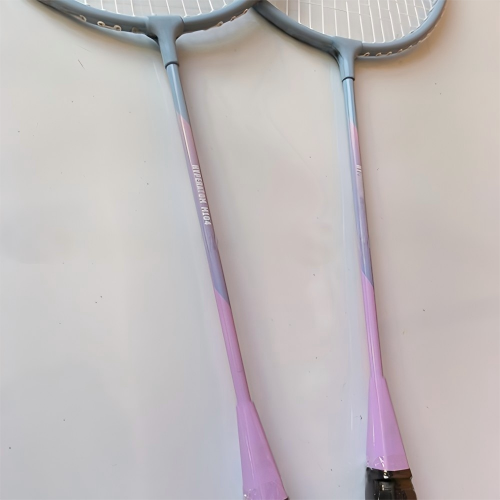
Badminton is one of the fastest racket sports in the world, and even a small improvement in swing speed can have a major impact on shot quality, reaction time, and rally control. One of the most important factors behind modern performance is badminton racket aerodynamic design. By reducing air resistance, improving frame stability, and optimizing weight distribution, an aerodynamic badminton racket helps players generate faster swings with less effort.
This article explains the meaning of aerodynamic racket design, how it works, its key benefits, common structural features, performance specifications, and the main factors that affect swing speed. The content is written for SEO use, with clear headings, keyword-rich explanations, and a practical table format suitable for blog pages, category pages, industry pages, and informational landing pages.
Badminton racket aerodynamic design refers to the shape and structural engineering of a racket frame, shaft, and head that reduces drag as the racket moves through the air. In simple terms, an aerodynamic racket is designed to slice through air more efficiently. This helps the player swing faster, transition quicker between shots, and maintain better control during fast exchanges.
Aerodynamic design is especially important in badminton because the sport demands repeated explosive movements, rapid wrist action, and quick recovery after every stroke. Unlike many other sports, badminton requires a racket to accelerate and decelerate extremely quickly. Even slight resistance from the air can reduce speed, increase fatigue, and limit shot sharpness.
Modern aerodynamic badminton racket design focuses on streamlining the frame profile, reducing frontal resistance, improving torsional stability, and balancing the racket for faster handling. These design choices are not only about appearance; they directly influence real on-court performance.
Swing speed is a critical performance factor in badminton because it affects power, timing, shot deception, and defensive response. Faster swing speed can improve smashes, drives, clears, and quick net exchanges. It also helps players react more efficiently to fast attacks from opponents.
A faster swing does not simply mean hitting harder. It also supports:
For competitive and recreational players alike, a badminton racket designed for aerodynamic efficiency can be a practical advantage.
The main purpose of aerodynamic design is to reduce drag. Drag is the force that resists motion when the racket moves through air. When drag is lower, the racket requires less effort to swing, allowing the player to accelerate it more easily and maintain speed through the hitting zone.
Several design principles contribute to this effect:
A streamlined frame has a smoother profile that allows air to flow around the head more efficiently. Traditional box-shaped frames may offer stability, but they usually create more resistance. Aerodynamic frames often feature a thinner, more rounded structure that cuts through the air faster.
Lower drag means less energy is lost to air resistance. This allows more of the player’s force to transfer into racket speed. In practical terms, the racket can move faster with the same swing effort.
In badminton, players must recover their racket position quickly after each shot. An aerodynamic racket helps during the return phase as well. Less resistance means the racket can be brought back into ready position faster, improving overall movement rhythm.
Many badminton shots rely heavily on wrist action. An aerodynamic racket can make wrist-driven movements feel smoother and lighter, helping players generate speed without overexertion.
During rapid exchanges, every fraction of a second matters. A racket with aerodynamic design is easier to maneuver, especially in doubles play where quick interceptions and defensive blocks are frequent.
While different models vary, most aerodynamic badminton rackets share several common structural characteristics. These features are used to improve swing speed, control, and overall responsiveness.
| Design Feature | Function | Performance Benefit |
|---|---|---|
| Slim frame profile | Reduces the surface area facing air resistance | Faster swing speed and smoother acceleration |
| Rounded frame edges | Improves airflow around the racket head | Lower drag and easier racket movement |
| Lightweight materials | Reduces overall mass | Quicker handling and reduced fatigue |
| Optimized shaft stiffness | Improves energy transfer and control | More stable, efficient swing response |
| Balanced head weight | Supports maneuverability without losing power | Good mix of speed and shot force |
| Narrow beam design | Decreases air resistance around the frame | Quicker racket head speed |
| Reinforced frame geometry | Maintains stability at high swing speeds | Less twisting and improved precision |
Aerodynamic design offers a wide range of benefits that are relevant for players at different skill levels. These advantages go beyond simple speed and can influence the full playing experience.
The most obvious benefit is increased swing speed. A racket that moves more easily through air can be accelerated faster, making it easier to produce quick attacks, sharp drives, and sudden changes in shot direction.
Although power depends on many factors, including technique and timing, an aerodynamic badminton racket can help players generate more effective racket head speed. Higher racket head speed often contributes to stronger smashes and deeper clears.
Fast defensive reactions are essential in badminton, especially against fast smashes. An aerodynamic racket can help players get into position quickly, improving block quality and defensive returns.
Lower air resistance means the player uses less energy per swing. Over the course of long matches or training sessions, this may help reduce shoulder, arm, and wrist fatigue.
Control is not only about string tension or grip technique. A racket that is easy to maneuver gives players better timing and more confidence in fast rally situations.
Because the racket is easier to swing repeatedly, players may experience more consistent timing and stroke quality, particularly during demanding match conditions.
Different manufacturers and engineering teams may use different approaches to aerodynamic badminton racket design. However, the following concepts are commonly used in the industry.
These design choices are often combined to create a racket that feels quick, responsive, and efficient across different shot types.
The following table outlines common specification ranges and their general impact on swing speed and performance. These values are typical industry examples and may vary depending on racket category and intended player level.
| Specification | Typical Range | Effect on Swing Speed |
|---|---|---|
| Weight | Approximately 75g to 90g | Lighter rackets usually swing faster and feel easier to handle |
| Balance point | Head-light to even balance | Helps improve maneuverability and quick racket recovery |
| Shaft stiffness | Medium to stiff | Supports efficient energy transfer and stable swing motion |
| Frame profile | Slim, rounded, aerodynamic beam | Reduces drag during both attacking and defensive swings |
| Head shape | Isometric or streamlined head design | Maintains playability while supporting speed |
| String tension | Usually adjusted by player preference | Does not directly affect drag, but influences feel and response |
| Material | Graphite, carbon fiber, composite materials | Allows lightweight construction with structural strength |
Traditional badminton racket design and aerodynamic design both serve important roles, but they emphasize different priorities. Traditional designs may focus more on stability, durability, or power-oriented head shapes, while aerodynamic designs prioritize speed and maneuverability.
| Aspect | Aerodynamic Design | Traditional Design |
|---|---|---|
| Air resistance | Lower drag | Usually higher drag |
| Swing speed | Faster | Moderate |
| Maneuverability | High | Medium |
| Shot recovery | Quicker | Slower relative recovery |
| Power emphasis | Balanced or speed-focused | May prioritize power or stability |
| Best suited for | Fast rallies, defense, doubles, quick drives | Players preferring solid feel and structural feedback |
Aerodynamic badminton racket design can benefit a wide variety of players. It is not limited to elite athletes. Different user groups may value different advantages.
Beginners may appreciate the easier handling and lighter feeling of an aerodynamic racket. A more maneuverable racket can make basic strokes feel more natural and reduce early fatigue during practice.
Intermediate players often look for a balance of speed, control, and power. Aerodynamic design can help improve consistency in drives, clears, and defensive shots as skill levels advance.
For experienced players, aerodynamic efficiency becomes even more valuable. Fast reaction time, quick net play, and explosive transitions all benefit from reduced air resistance and improved swing dynamics.
Doubles badminton involves quick exchanges, flat rallies, and constant interception. Aerodynamic design is particularly useful in doubles because the racket must move rapidly in limited time and space.
Singles players may also benefit from a faster racket, especially for defense, drive exchanges, and quick follow-up shots after clears or smashes.
Aerodynamic design depends not only on shape but also on materials. Lightweight yet strong materials allow manufacturers to create frames that are slim and stable at the same time.
These materials make it possible to reduce bulk without sacrificing performance stability. That is especially important in aerodynamic badminton racket design, where frame geometry must remain strong during high-speed swings and powerful impacts.
When analyzing a badminton racket for aerodynamic efficiency, several practical factors should be considered. These factors can help determine whether a racket is truly designed for faster swing speed.
In performance terms, aerodynamic design should make the racket feel faster through the air, easier to control during recovery, and less tiring over repeated swings.
From an informational and SEO perspective, the topic of how badminton racket aerodynamic design improves swing speed is highly relevant because it combines technical product education with searchable commercial intent. Users often look for explanations about badminton racket speed, aerodynamic frame design, lightweight rackets, racket swing dynamics, and performance specifications.
A well-structured page covering this topic can rank for a variety of related search terms, including:
Search engines often favor pages that provide clear definitions, practical tables, repeated topical relevance, and a logical heading structure. This makes a well-written informational section especially useful for blogs, catalog pages, industry pages, and educational website content.
| Term | Meaning |
|---|---|
| Aerodynamics | The study of how objects move through air and how air resistance affects motion |
| Drag | The resistance an object experiences when moving through air |
| Maneuverability | How easily a racket can be moved and repositioned |
| Balance point | The distribution of weight along the racket that influences swing feel |
| Frame profile | The shape and thickness of the racket head and beam |
| Sweet spot | The optimal hitting area on the string bed for efficient shuttle contact |
| Swing speed | The velocity at which the racket moves during a stroke |
Badminton racket aerodynamic design improves swing speed by reducing air resistance, streamlining the frame, and supporting faster movement through the air. This design approach helps players generate quicker strokes, recover faster between shots, and maintain better control during high-speed rallies. By combining lightweight materials, slim frame profiles, and balanced construction, aerodynamic badminton rackets deliver meaningful performance advantages for players of many levels.
For badminton brands, distributors, retailers, and content publishers, this topic offers strong informational value and strong SEO potential. Clear definitions, structured tables, and keyword-rich descriptions make it suitable for direct insertion into HTML pages as an educational and search-optimized content block.
이 웹사이트는 귀하가 당사 웹사이트에서 최상의 경험을 할 수 있도록 쿠키를 사용합니다.


 English
 Español
 Pусский
 Français
 日本語
日本語 العربية
 हिन्दी
 Tiếng Việt
 中文
中文



 핸드폰
핸드폰
논평
(0)