

The shipment that fails at customs usually failed months earlier â at the licence application nobody started, the permit category nobody matched, or the renewal date nobody diarised. Approvals are the quiet gating items of import trade, and they run on their own calendars. This guide maps the badminton rackets approval stack and when each piece must move.
Customs paperwork rewards the early and punishes the punctual-but-late: an application filed with margin is routine, the same application filed against a sailing date is a crisis. The approval stack is a schedule, and this guide treats it as one.
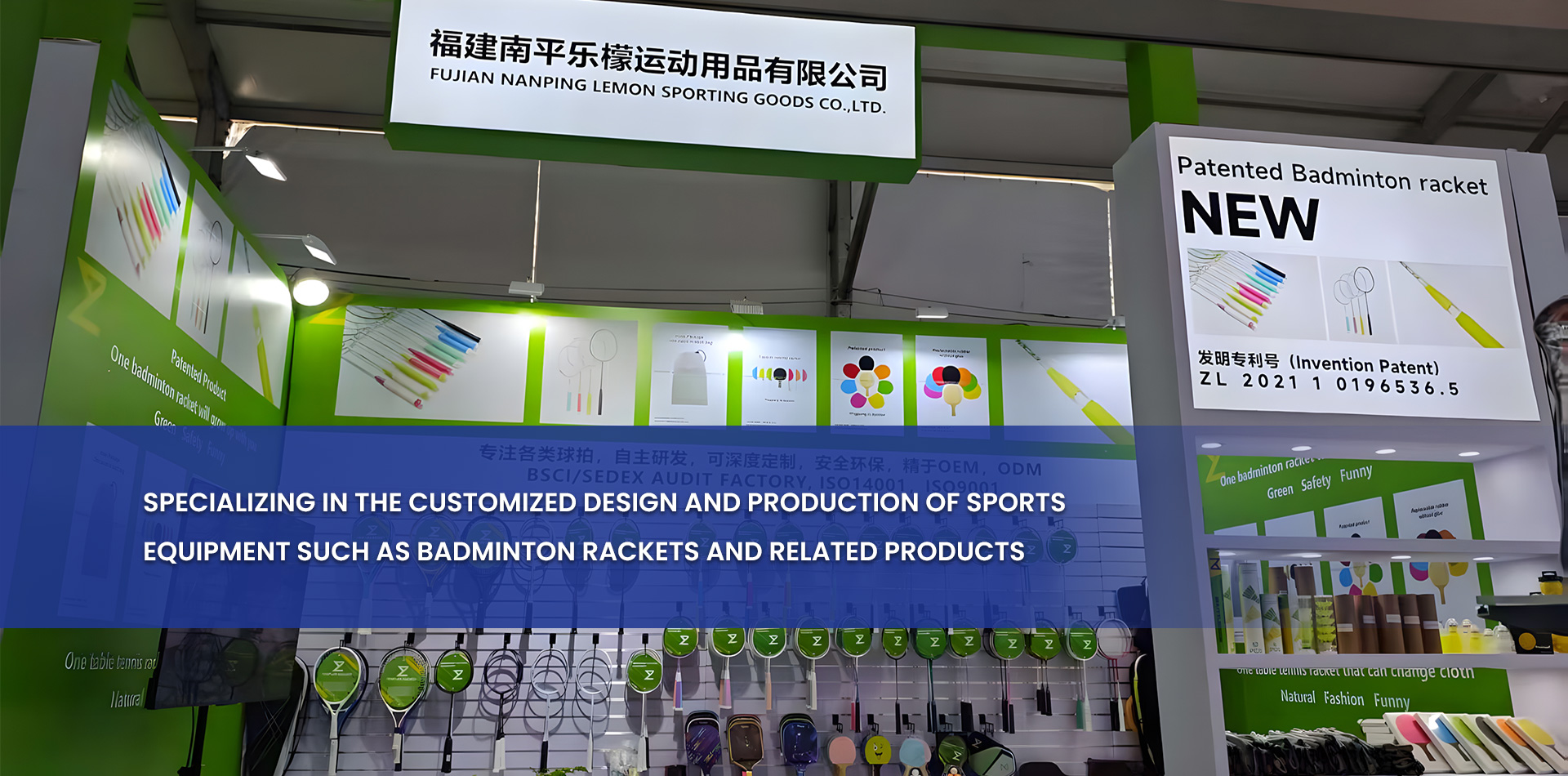
This guide walks through the import process for badminton and racket sports equipment step by step, from first enquiry to delivery, based on the experience of æå·ä¹æª¬è¿åºå£æéå ¬å¸ (www.factoryracket.com) in exporting to more than forty countries.
A well-prepared enquiry gets a faster, more accurate quotation. These are the details a supplier needs.
Technical specification: capacity, dimensions, voltage, material and performance requirements.
Quantity and SKU mix: order volume by model, not a single aggregate number.
Target price indication: a ballpark helps the supplier propose the right configuration.
Destination port or address: determines freight and delivery terms.
Certification needs: any market-specific compliance requirement.
Packaging and branding: neutral, retail or private-label.
Delivery timeline: when you need the goods in hand, not just shipped.
Incoterms define where the supplier's responsibility ends and yours begins. Choosing the right term avoids disputes over cost and risk.
| Term | Supplier Responsibility | Buyer Responsibility | Best For |
|---|---|---|---|
| EXW | Makes goods available at factory | All transport and export | Buyers with strong logistics |
| FOB | Delivers to origin port, clears export | Freight and import | Most common for sea freight |
| CIF | Adds freight and insurance to destination | Import clearance and duty | Buyers new to importing |
| DDP | Delivers duty paid to your door | Nothing until unloading | Turnkey convenience |
For first-time importers, CIF or DDP simplifies the process at the cost of some transparency. Experienced buyers often prefer FOB so they control the freight forwarder and can optimise cost.
Transport mode is a trade-off between speed, cost and cargo characteristics.
| Mode | Transit Time | Cost | Best For |
|---|---|---|---|
| Sea FCL | 25â40 days | Lowest | Large volume, full container |
| Sea LCL | 30â45 days | Medium | Small volume, shared container |
| Air | 5â10 days | Highest | Urgent or high-value |
| Rail | 15â25 days | Medium | Inland Europe, balanced speed |
For heavy industrial goods, sea freight almost always wins on cost. For urgent spare parts or high-value items, air freight may be justified. Confirm the volumetric weight because bulky low-density cargo is charged by volume, not mass.
Incomplete documentation is the most common cause of customs delay. The standard set includes:
Commercial invoice: value, description and terms of sale.
Packing list: contents, weights and dimensions per package.
Bill of lading or airway bill: the transport document.
Certificate of origin: may reduce duty under a trade agreement.
Inspection or test certificates: required for regulated products.
Compliance declarations: CE, FDA or other market-specific documents.
Classify your product with the correct HS code early. Misclassification can trigger penalties and delays, and it also determines the duty rate.
Selling imported goods successfully usually requires adaptation to local expectations.
Voltage and frequency: match the local power supply.
Language: manuals, labels and packaging in the market language.
Compliance text: importer identification and safety statements.
Packaging: retail-ready or transit-safe configurations.
Barcode: your GS1 barcode for retail channels.
Discuss customization before the first order, because changes to tooling and artwork affect lead time and MOQ.
Standard payment terms balance risk between buyer and seller. Common arrangements include a deposit with the balance against a copy of the bill of lading, letters of credit, and open account terms for established relationships.
For first orders, a deposit-plus-balance structure is normal. As trust builds, more flexible terms become available. Always confirm the terms in writing and use secure payment channels.

A good freight forwarder is worth more than a small difference in rate. They handle booking, documentation, customs brokerage and last-mile delivery, and they warn you about regulatory changes.
Ask for a door-to-door quotation and compare total landed cost rather than headline freight rate. Confirm which charges are included and which are billed separately.
Landed cost is the only meaningful basis for comparing suppliers. This table shows the typical components.
| Cost Component | Typical Share | Notes |
|---|---|---|
| Product cost (FOB) | 60â75% | The negotiable portion |
| Freight | 8â18% | Depends on mode and volume |
| Insurance | 0.3â1% | Recommended for sea freight |
| Import duty | 0â15% | Depends on HS code and origin |
| Customs clearance | 2â5% | Brokerage and handling |
| Inland delivery | 2â6% | From port to warehouse |
| Inspection | 0.5â2% | Optional but recommended |
Model these components before you negotiate. A supplier with a slightly higher FOB price but better packing efficiency can deliver a lower landed cost.
Regulatory requirements vary by market. These are the documents most commonly requested for this product category.
BWF Laws of Badminton: ensure the shipment documentation references this standard where applicable.
ISO 9001: ensure the shipment documentation references this standard where applicable.
CE: ensure the shipment documentation references this standard where applicable.
REACH: ensure the shipment documentation references this standard where applicable.
BWF approval: obtain a copy for customs and for your own records.
ISO 9001:2015: obtain a copy for customs and for your own records.
CE: obtain a copy for customs and for your own records.
Follow this sequence to keep a first import on schedule.
Prepare a complete technical specification and enquiry.
Obtain quotations on a consistent Incoterm.
Approve samples and confirm the final specification.
Agree payment terms, lead time and packaging.
Confirm the HS code and duty rate for your market.
Arrange freight and insurance with a forwarder.
Complete pre-shipment inspection before release.
Clear customs and arrange inland delivery.
Inspect on arrival and record results.

The stack differs by country and product, but its shape is constant. The layers and their calendars:
| Approval Layer | What It Covers | When It Must Start Moving |
|---|---|---|
| Product eligibility check | Whether the item may be imported at all, under which conditions | Before the RFQ â nothing else matters if the answer is no |
| Import licence or registration | The legal permission tied to importer, product or volume | At order placement; lead times run weeks to months and are not compressible by urgency |
| Standards conformity and certification | Market-entry marks, safety approvals, labelling registrations | At design freeze â certificates name exact models and revisions, so late changes restart them |
| Pre-shipment documents | Certificates of origin, fumigation, inspection mandates | Two to three weeks before shipment, with formats confirmed against current requirements |
| Entry filings and duties | Customs declaration, tariff classification, preferential claims | Broker engaged before the vessel sails; classification disputes are far cheaper pre-arrival |
The management method is the approval calendar: one page per import programme listing every layer, its owner, its lead time and its expiry. Review it at every order milestone, because approvals quietly expire â a licence valid at quotation can lapse by shipment, and the renewal nobody diarised is the delay nobody budgeted. Suppliers and forwarders will remind you about their half of the stack and assume you own yours; the calendar is how you own it. Buyers who run the approval stack as a schedule file their entries on time for years and forget the method exists â which is exactly what a working system feels like.
CIF or DDP is easiest for a first shipment because the supplier arranges more of the process. Experienced importers often move to FOB to control freight cost and the forwarder relationship.
Sea freight takes roughly 25â45 days depending on route and service, air freight 5â10 days, and rail 15â25 days to inland Europe. Add production lead time before shipment.
Ask your customs broker or the supplier for the recommended classification, then verify it with your local customs authority. Incorrect classification can cause penalties.
It is strongly recommended for first orders. A third-party inspection verifies quantity, quality and packaging before the goods leave the factory.
A deposit with the balance against shipping documents is common for first orders. Letters of credit are used for larger transactions, and open account terms develop with established relationships.
Yes. Most factories offer private-label packaging, custom marking and market-specific documentation. Confirm MOQ implications early.
Request a door-to-door quotation itemising all charges, confirm which are included, and model the full landed cost before ordering.
Document the condition on arrival with photographs, notify the supplier and forwarder promptly, and reference your inspection and insurance terms.
Every award decision is made once with full context and remembered forever without it. The decision log is the antidote â a dated, half-page record written at the moment of choice, while the reasoning is still real:
Four lines per entry: the decision, the top three reasons, the alternatives rejected with one-line whys, and what evidence would change your mind. Half a page; the constraint is what keeps the habit alive.
Written before the result: the log's entire value comes from timestamping judgement ahead of outcome â hindsight rewrites memory within weeks, and the log catches it in the act.
Stored where the next buyer will find it: decision logs filed in personal inboxes die with the buyer's tenure; the file is an organisational asset or it is nothing.
Reviewed, not just kept: re-reading last year's entries before this year's equivalent decision is where compounding happens â the log is a practice, not an archive.
Honest about pressure: 'chosen partly because the quarter needed the award' is an uncomfortable line and the most valuable one in the file; logs without pressure recorded are fiction with dates.
The measurable payoff arrives in two forms: faster disputes (when someone asks months later why a supplier was chosen, the answer cites a document instead of a person's memory) and better patterns (twelve months of entries reveal the heuristics that actually worked versus the ones that merely sounded rigorous). Suppliers benefit too â decisions explained in writing are decisions that survive staff turnover on both sides. The format costs four minutes per award; the alternative is an organisation that re-litigates its own history every time personnel change. There is no cheaper institutional memory in procurement, and none more consistently postponed until the first dispute makes its absence expensive.

Permit work is checklist work, and the checklist is written in calm weather for use in deadline weather. The construction sequence:
Classify the product first, in writing: tariff code, and with it the licence, permit and certification obligations that attach â the classification decision drives every other line, so it gets documented with its reasoning.
List each approval with its authority, lead time and validity: the registry of your own programme's gating items â lead times from actual experience, not from hope, and validity dates in a calendar with renewal alarms.
Name an owner per line: approvals owned by 'the team' are approvals owned by whoever discovers the gap first, usually at the worst possible moment.
Attach the document formats: current templates, required attachments, submission channels â forms change quietly, and last year's format is this year's rejection.
Rehearse the critical path once: walk one order through the checklist end to end with all owners present; the dry run finds the sequencing errors that the deadline otherwise finds for you.
Maintain the checklist per product family and per destination, and revise it after every import that surprises anyone â surprises are the checklist's raw material. Share the relevant lines with suppliers, because several approvals originate on their side and their calendars need the same discipline. Buyers who run permit checklists file entries that clear on first submission; buyers who run from memory pay, on some order every year, the tuition of a warehouse detention, a re-lodged application or a re-classification dispute. The checklist is an afternoon to build and an hour a quarter to maintain, and it converts customs from a lottery into a schedule.
The inspection company supplies the inspector; the buyer supplies the definition of success. The brief that separates protection from paperwork:
The sampling plan, named and agreed: which standard, which AQL, which lot definition â the inspection is only as meaningful as the sampling statistics both sides accepted in advance.
The critical-dimension and checklist content: your specification's top items, not the inspection company's generic template â generic templates certify arrival; specific checklists certify conformance.
Function and packaging tests as written procedures: the tests named in the specification, performed as written, with results recorded per unit â not 'function: OK'.
Photo and evidence requirements: markings, labels, batch codes, packing sequence, container loading if included â the evidence that makes later claims investigable rather than arguable.
The reporting escalation rule: what happens on failure â hold, re-work verification, re-inspection trigger â agreed before the inspection, because the day of the failed inspection is the wrong day to negotiate consequences.
Book inspections at production milestones â after completion, before final packing, before loading â and align each with the decision it informs: accept, re-work or reject. Read the report against the brief, not against hope; a report that answers different questions than the ones asked is a failed engagement, however polished. Third-party inspection costs a fraction of one container's value and, briefed properly, prevents the conversations that a container of nonconforming goods opens. Briefed lazily, it provides a comfortable PDF and no protection â the difference was never the inspector; it was the brief.
Programmes drift not because anyone decides poorly but because nothing is scheduled when it should be â reviews, audits, renewals and forecast updates all compete for a slot that was never reserved. The procurement calendar page ends the competition:
Fixed dates for the recurring spine: monthly reviews, quarterly scorecards, annual assumption audits, supplier re-qualifications â the events that make the programme a system get dates before anything else claims them.
External seasons mapped inward: supplier shutdowns, freight rate seasons, audit windows at your own customers â the calendar is where their year meets yours, deliberately.
Expiry alarms, not just expiry dates: certificates, licences, insurance, framework agreements â each carries a renewal lead time, and the alarm fires at the lead time, not the deadline.
One owner per entry, one page total: calendars that sprawl across systems die; the single sheet, visible and printed, survives because it is findable.
Reviewed monthly with the same five numbers: the calendar review is one agenda item in the existing review, not a new meeting â the discipline that keeps it alive past March.
The page's value is cumulative: by the second year it becomes the programme's memory of its own rhythm â when capacity tightens, when certificates cluster, when the surge quarter lands â and the third year's plan is built on evidence instead of optimism. Buyers who keep one report fewer fire drills and shorter lead-time surprises within two quarters, because the items that used to interrupt are now items that were scheduled. An hour of setup, ten minutes a month of maintenance; the alternative is the programme where important things are always urgent and urgent things are always someone else's fault.
Every commercial relationship runs on asymmetric information, and the asymmetries are mappable â which makes them manageable. The ledger, drawn once per major supplier:
| Domain | What the Supplier Knows That You Do Not | What You Know That They Do Not â and Should |
|---|---|---|
| True cost structure | Real input costs, yield rates, where the margin actually sits | Your demand stability, payment reliability, total account value â the reasons to price you fairly |
| Capacity reality | The real order book, whose orders get prioritised in a crunch | Your forecast bands and flexibility â the information that earns priority honestly |
| Quality history | Which lines, shifts or sub-suppliers carry more risk | Your field-failure data â the feedback that fixes their process faster than any audit |
| Your alternatives | Only what they guess â usually less than you fear | Your genuine options and switching costs â calibration, not threat; suppliers respect informed buyers |
| Their intentions | Whether they are investing, divesting, or repositioning your product | Your own intentions â growth, consolidation, exit criteria â stated before they are guessed |
The ledger's purpose is not espionage; it is exchange. Most asymmetries shrink when one side trades first: buyers who share honest forecasts receive real capacity planning in return; buyers who report field failures receive engineering attention instead of defensiveness. The asymmetries that should not shrink â the supplier's cost floor, your walk-away point â are managed by awareness rather than disclosure, which is itself the ledger's lesson: know what is unknown, choose deliberately what to trade, and stop pretending the map does not exist. An hour per strategic supplier, revisited annually; the negotiation table is a friendlier place when both parties know who knows what.

Negotiation outcomes are mostly decided before the meeting, and the reading that decides them is short. The stack, in order:
The full history of the account: orders, claims, exceptions, emails of consequence â patterns in the history (the repeated late deliveries, the always-honoured expedite) are the negotiation's real currency.
Your own normalised price data: the cost history adjusted for scope and market context â the numbers that keep the conversation anchored to evidence rather than to whoever speaks with more confidence.
Market context on one page: input indices, freight rates, currency movement since last negotiation â separating 'the market moved' from 'the quote moved' is the argument you will actually have.
The correspondence that promised things: the emails where the supplier committed to capacity, dates or support â read twice, because commitments live exactly where busy buyers stopped looking.
Your own decision log from last round: what you agreed and why, written by past-you with context present-you has already lost â the cheapest coaching available, and the most ignored.
Ninety minutes across five documents converts preparation from a feeling into a file, and the file changes the meeting's register before anyone speaks: the buyer who opens with precise history negotiates against evidence, and evidence is the one opponent suppliers price honestly against. The stack also disciplines timing â several of its pages have expiry-shaped value, and a negotiation opened while market data is current opens with different numbers than one opened after the quarter turned. Read before every significant negotiation; the ritual is short, and its absence is visible in every concession made to a confident generalisation.
For continuity, no; for coverage, it is better than nothing and worse than presence, by design. Remote sessions verify premises, live processes and documents credibly â and they cannot verify what is outside the frame, which is precisely where unprepared factories keep their reality. The working rule: visit before first major award and after any major change; run remote sessions quarterly in between. Buyers who treat video as the between-visits instrument, rather than the alternative to visiting, get most of the assurance at a fraction of the cost â and the visits themselves improve, because the remote record tells you exactly what to inspect in person.
The buyer pays, and should â the inspector works for whoever funds them, which is exactly why the brief must come from you rather than the supplier. Book at the point where correction is still cheap: typically after production is complete and before final packing, so a failure means re-work rather than rejection; for high-risk launches, add a during-production check and a loading supervision. Reserve the slot when the order is placed â inspectors in busy seasons book out weeks ahead â and brief them in writing well before the visit, because an inspector reading your specification on the plane is already too late.
Before the order is placed, at least in draft: classification determines the obligation, the obligation determines lead time, and the lead time belongs in the project plan while the plan can still absorb it. In practice, applications that begin at order placement clear comfortably when lead times run four to eight weeks; applications that begin at production completion inherit every week of slippage the factory contributed. Diarise renewals at the same moment â a licence that expires between quotation and shipment has quietly converted a routine order into a customs seminar.
Almost always when the duty cycle is heavy, and almost never when it is light â which is why the answer is an arithmetic exercise, not an opinion. Take the consumption difference, apply your real duty cycle and utility rates, and compare the saving stream against the price premium over your holding horizon. Heavy-duty applications routinely repay double-digit premiums within two or three years; single-shift, light-duty use rarely repays anything. The error to avoid is comparing datasheet ratings instead of consumption at your duty cycle â the brochure numbers assume a reference week you will never run.
Verify before you accuse, and use an independent laboratory on a retained sample â suspicion tested quietly either resolves as false, which ends the worry, or confirms as fact, which becomes evidence. With confirmation in hand, the conversation is documentary rather than emotional: the specification, the certificate, the lab result. Consequences follow the contract â re-work, replacement, re-qualification â and the commercial follow-through matters more than the incident: a substitution accepted with a discount becomes a pricing model, while one met with re-qualification becomes a story suppliers tell each other about your account. Both outcomes are remembered; only one is profitable.
If you are planning a first or repeat import of badminton and racket sports equipment, æå·ä¹æª¬è¿åºå£æéå ¬å¸ (www.factoryracket.com) can guide you through specification, packaging, documentation and shipping. Visit www.factoryracket.com to discuss your requirement and request a landed-cost quotation.
이 웹사이트는 귀하가 당사 웹사이트에서 최상의 경험을 할 수 있도록 쿠키를 사용합니다.


 English
 Español
 Pусский
 Français
 日本語
日本語 العربية
 हिन्दी
 Tiếng Việt
 中文
中文



 핸드폰
핸드폰
논평
(0)